The Practical AI Sales Stack for Small B2B Teams

It is easy for a small B2B team to assemble an impressive-looking AI sales stack and still not sell more. The market overflows with tools promising to find, enrich, message, and close leads automatically, and stacking them up burns budget and creates a tangle of disconnected systems. A practical stack is the opposite: a small number of tools that each earn their place, connected so data flows cleanly, with AI applied where it genuinely helps rather than everywhere at once. Here is how to think about building one without overspending or over-engineering.
Start with the funnel, not the tools
The mistake is shopping for tools first. Start instead with your actual sales process: how do you find prospects, qualify them, reach out, follow up, and close? Map that, then ask where the real friction and wasted time are. Maybe reps spend hours researching leads, or follow-ups slip, or messaging is inconsistent. Those friction points are where tools, AI or otherwise, should go. Building from your funnel keeps you from buying capabilities you do not need and ensures every tool solves a problem you actually have, rather than one a vendor convinced you to worry about.
The layers of an AI sales stack
A practical stack has a few clear layers, and a small team rarely needs more than one tool per layer.
- Data and enrichment: finding prospects and filling in context so reps target the right people.
- CRM: the system of record where everything lives; the foundation the rest connects to.
- Outreach and sequencing: sending and following up at scale without losing the personal touch.
- Signals and intent: knowing which accounts are worth attention now.
- Assist and admin: AI that drafts, summarises calls, and updates records, removing busywork.
You do not need all of these on day one, and several tools span more than one layer, which is often how small teams keep the stack lean.
Where AI genuinely helps in sales
AI earns its place in a sales stack where it removes drudgery or surfaces what a human would miss, not where it replaces the relationship. It is genuinely useful for enriching and researching leads, drafting first-pass personalised messages a rep then refines, summarising calls and auto-updating the CRM, and flagging which accounts are showing intent. It is far weaker, and often counterproductive, at fully automating the human parts of selling: the judgement, the relationship, the nuanced conversation. The teams that benefit most use AI to give reps more time and better context for the human work, which is the same lesson behind turning meeting notes into follow-up rather than letting admin eat selling time.
Where to start small
For a small team, start with the single biggest friction point and a CRM that everything can connect to. If reps drown in research, begin with enrichment, as covered in our lead enrichment guide. If follow-up is the leak, start with sequencing. Add one tool, integrate it properly, prove it earns its keep, and only then add the next. This deliberate, one-layer-at-a-time approach builds a stack you actually use, with clean data flowing between tools, instead of a graveyard of half-adopted subscriptions. A lean, well-connected stack almost always outperforms a sprawling one a small team cannot maintain.
A simple stack a small team can start with
If you want a concrete starting shape rather than a shopping list, most small B2B teams do well beginning with just two or three things that work together. A CRM is the non-negotiable foundation, the single place where leads, conversations, and deals live, because without it every other tool creates a disconnected island of data, and keeping that CRM data trustworthy with CRM cleanup automation protects everything built on it. Around that, add one enrichment or data source so reps target the right people with context, and one outreach tool so follow-up is consistent and nothing slips.
That is often enough to run a real outbound motion. Layer in AI assist, call summaries that auto-update the CRM, draft messages reps refine, only once the basics are flowing cleanly, because it removes busywork rather than adding a new capability you depend on. Resist adding intent tools, multiple data providers, or specialist platforms until you have outgrown the simple setup and can clearly name the problem each new tool solves. A small team that masters three connected tools will out-execute one drowning in eight half-used subscriptions.
What to avoid
A few traps catch small teams repeatedly. The first is tool sprawl: buying overlapping products that each do a slice of the job, leaving data scattered and reps confused. The second is automating outreach so aggressively that quality collapses, the classic way to lower your reply quality and burn your domain reputation. The third is neglecting integration, so tools do not talk to each other and reps end up copying data by hand, defeating the point. And the fourth is mistaking activity for results, measuring volume of messages sent rather than meetings booked and deals won. Keep the stack small, connected, and pointed at outcomes, and it becomes a genuine advantage rather than an expensive distraction.
Frequently asked questions
What should be in a small B2B team’s AI sales stack?
At most a few tools across clear layers: data and enrichment, a CRM as the system of record, outreach and sequencing, optionally intent signals, and AI assist for drafting and call summaries. A small team rarely needs more than one tool per layer, and several tools span multiple layers. Start with the biggest friction point and a CRM everything connects to, then add layers only as you prove each one earns its place.
Where does AI actually help in sales?
AI helps most where it removes drudgery or surfaces what a human would miss: enriching and researching leads, drafting first-pass personalised messages for a rep to refine, summarising calls and updating the CRM, and flagging accounts showing intent. It is weak at, and often hurts, the human parts of selling, the judgement, relationship, and nuanced conversation. Use AI to give reps more time and better context for the human work, not to replace it.
How do I avoid overspending on sales tools?
Build from your funnel, not from vendor pitches: identify your biggest friction point and address that first with a single, well-integrated tool, then add others only as each proves its value. Avoid overlapping tools that scatter your data, and measure outcomes like meetings booked rather than activity. A lean, connected stack almost always outperforms a sprawling one, and it is far cheaper to run and maintain for a small team that has no time to babysit a dozen disconnected tools that never quite talk to each other or justify their monthly cost.

Written by gautam995576@gmail.com
AI automation editor focused on workflow design, tool selection, privacy checks, and operational clarity.
Related automation guides
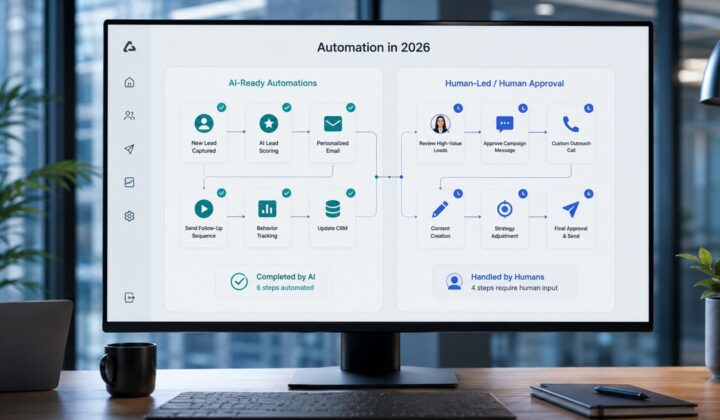
Marketing Automation in 2026: What Is Ready and What Still Needs Humans
Where marketing automation genuinely delivers in 2026 and where it still needs a human, so you automate the right work and keep…

AI Content Operations Workflow for Small Marketing Teams
How a small marketing team can build an AI content workflow that keeps quality high: roles, review steps, and where AI helps…
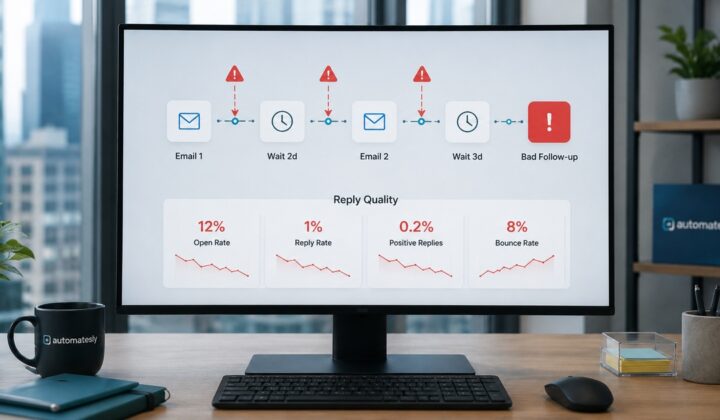
Sales Automation Mistakes That Lower Reply Quality
The sales automation habits that quietly kill reply rates, from over-personalised spam to broken sequences, and how to automate without sounding like…