Marketing Automation in 2026: What Is Ready and What Still Needs Humans
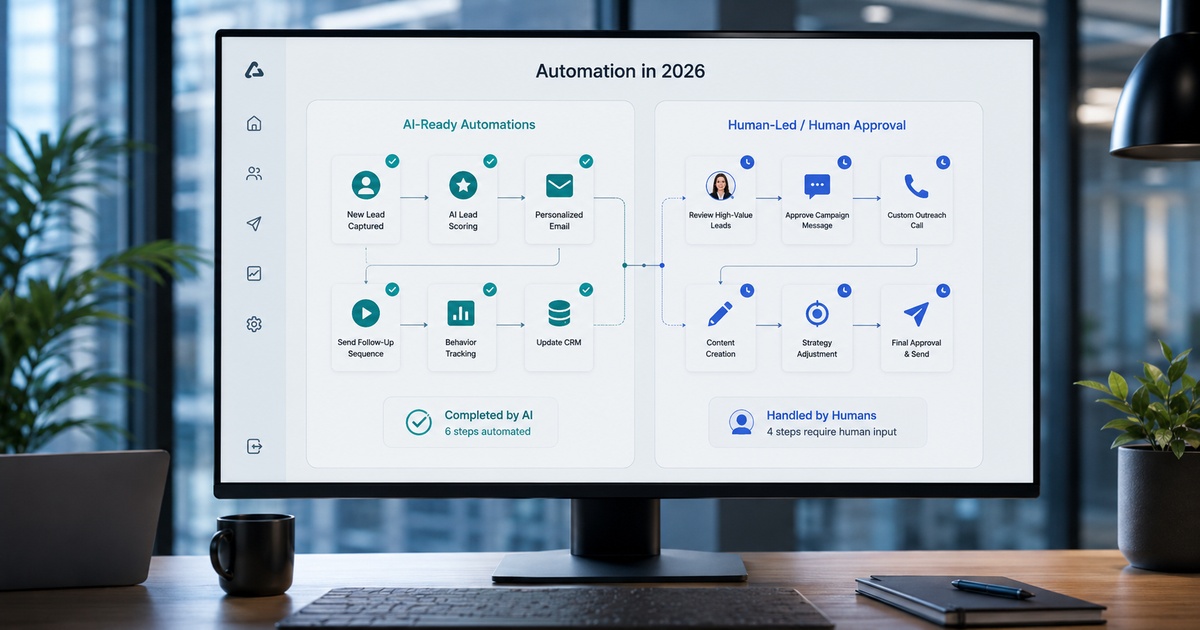
The conversation about marketing automation has shifted from “can we automate this?” to “should we, and where does a human still belong?” The capabilities have genuinely advanced, but the hype outruns the reality, and teams that automate indiscriminately end up with efficient mediocrity: more content and campaigns, less of the judgement and taste that actually move people. The useful question in 2026 is not how much you can automate, but where automation genuinely delivers and where keeping a human in the loop protects quality. Here is a grounded view of that dividing line.
What is genuinely ready to automate
A lot of marketing work is now reliably automatable, and refusing to automate it is just wasted effort. The mechanical, repetitive, and data-heavy parts are ready: scheduling and distributing content, routing and nurturing leads through defined journeys, segmenting audiences, running and analysing A/B tests, assembling reports, and producing first drafts and variations of routine copy. AI assistance has made the drafting and analysis layers far more capable than a few years ago. For this category of work, automation frees marketers from busywork and genuinely scales output, and the teams doing it well treat these as solved problems to delegate, much like any other workflow automation use case.
What still needs humans
The parts of marketing that depend on judgement, taste, and genuine understanding still need humans firmly in charge, and pretending otherwise shows. Strategy and positioning, what to say and why, remain human work. So does brand voice and the creative spark that makes content worth reading rather than merely present. Understanding customers as people, not data points, and responding to nuance and context, resists automation. And final judgement on quality, tone, and appropriateness needs a human, because automated marketing at scale can do reputational damage at scale when it misreads the moment. AI can draft and assist here, but the human provides the judgement that separates good marketing from generic noise.
The realistic dividing line
A useful rule of thumb: automate the production and distribution, keep the strategy and the soul human. Or put differently, automate the “how” and the “when,” keep the “what” and the “why” with people. The mechanical execution of a clear creative and strategic direction is ready for automation; the direction itself, and the taste to know when something is off, is not. Teams that get this right use automation to handle scale and speed while concentrating their human effort on the decisions and creativity that automation cannot replicate, which is the same balance our look at sales automation mistakes draws in outreach.
How to combine them well
In practice the strongest setups are hybrids where humans set direction and review quality, and automation handles execution at scale. A human defines the strategy, voice, and standards; AI and automation draft, distribute, segment, and report against them; a human reviews and refines before anything reputation-bearing goes out. This is especially important for content, where a defined AI content operations workflow with human review at the right points lets a small team scale output without scaling mediocrity. The goal is not maximum automation; it is the right division of labour, machines for the repeatable, humans for the judgement, so you get both efficiency and quality instead of trading one for the other.
A practical test for the dividing line
When you are unsure whether to automate a particular piece of marketing work, a few questions usually settle it. Does this task have a clearly right way to do it, or does it require judgement and taste? Mechanical, rule-bound work is ready to automate; judgement-heavy work is not. Would a mistake here be embarrassing or damaging to the brand, or merely a minor inefficiency? The higher the stakes, the more a human belongs in the loop, at least to review.
Is this the kind of thing where being generic is fine, or where being generic is the failure? Distribution and reporting can be generic; positioning and brand voice cannot. And finally, am I automating to free humans for higher-value work, or to remove humans from work that needs them? Automation that gives marketers more time for strategy and creativity is a win; automation that strips judgement out of work that depends on it is a slow-motion brand problem. Run a task through those questions and the right answer is usually clear, no hype required.
Will AI replace marketers?
Not the parts that matter most. AI is increasingly capable at the mechanical and data-heavy work, drafting, distribution, segmentation, reporting, but strategy, positioning, brand voice, creative judgement, and understanding customers as people remain human work. The realistic future is marketers using AI to handle scale and speed while concentrating their effort on the judgement and creativity automation cannot replicate. The role shifts toward direction and quality control rather than disappearing.
Should small teams adopt marketing automation now?
Yes, for the mechanical, repetitive work, scheduling, distribution, lead routing, segmentation, reporting, and first drafts, where it reliably saves time and scales output. Not automating that work is usually wasted effort. What small teams should resist is automating strategy, brand voice, and final quality judgement. Start by automating the busywork, keep humans firmly on the direction and review, and you get efficiency without sacrificing the quality that makes marketing work.
Frequently asked questions
What parts of marketing can be automated in 2026?
The mechanical, repetitive, and data-heavy parts: scheduling and distributing content, routing and nurturing leads through defined journeys, segmenting audiences, running and analysing A/B tests, assembling reports, and producing first drafts and variations of routine copy. AI assistance has made drafting and analysis notably more capable. For this category of work, automation reliably frees marketers from busywork and scales output, and not automating it is usually just wasted effort.
What marketing work still needs humans?
The work that depends on judgement, taste, and genuine understanding: strategy and positioning, brand voice and creative spark, understanding customers as people, and final judgement on quality, tone, and appropriateness. AI can draft and assist, but humans must provide direction and review, because automated marketing at scale can also do reputational damage at scale when it misreads context. Automate the production and distribution; keep the strategy and the soul human.
How should small teams balance marketing automation and human work?
Use a hybrid: a human sets strategy, voice, and quality standards; automation and AI handle drafting, distribution, segmentation, and reporting against them; a human reviews before anything reputation-bearing goes out. Automate the how and the when, keep the what and the why with people. This lets a small team scale output without scaling mediocrity, getting both efficiency and quality rather than trading one for the other.

Written by gautam995576@gmail.com
AI automation editor focused on workflow design, tool selection, privacy checks, and operational clarity.
Related automation guides
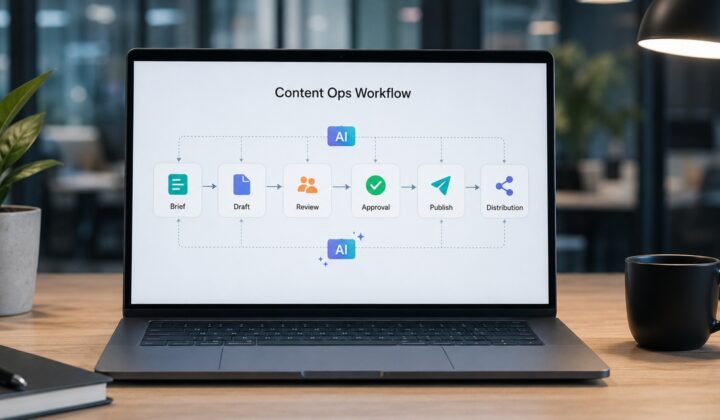
AI Content Operations Workflow for Small Marketing Teams
How a small marketing team can build an AI content workflow that keeps quality high: roles, review steps, and where AI helps…
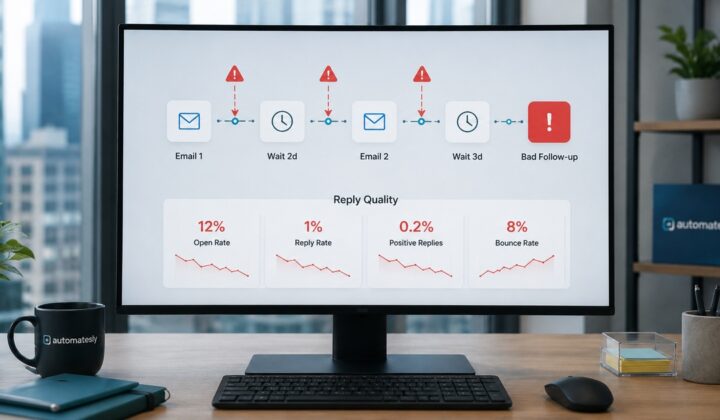
Sales Automation Mistakes That Lower Reply Quality
The sales automation habits that quietly kill reply rates, from over-personalised spam to broken sequences, and how to automate without sounding like…
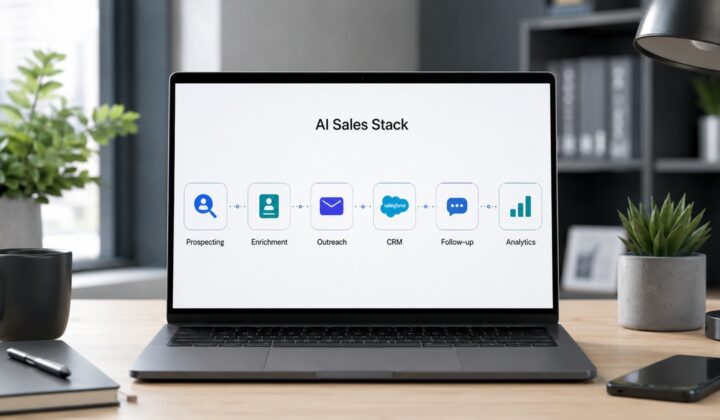
The Practical AI Sales Stack for Small B2B Teams
A realistic AI sales stack for small B2B teams: which tools earn their place, how the pieces fit together, and where to…