Resume Screening AI Risks and Safer Review Practices

Resume screening is one of the most tempting things to automate in hiring, the volume is high, the work is tedious, and AI can rank a thousand applications in seconds. It is also one of the most dangerous, because screening decides who gets a chance, and an automated screen that is biased or blunt does harm at scale and largely out of sight. AI resume screening is not inherently unusable, but it carries real risks that hiring teams must understand and manage, with humans firmly in charge of who advances. Here are the genuine risks and the safer practices that let you gain efficiency without crossing into harm.
Why resume screening AI is risky
The core problem is that resume screening AI learns from data, and hiring data carries the patterns of past decisions, including their biases. A model trained to find candidates resembling those hired before can quietly learn to favour or penalise characteristics correlated with protected groups, encoding historical discrimination into an automated, scaled filter. Unlike a single biased reviewer, an automated screen applies its bias consistently to every applicant, so the cumulative impact is large, and because it operates as a score or ranking, the bias is hard to see. The very efficiency that makes it attractive, screening at scale, is what makes its mistakes consequential.
The main risks
Several distinct risks sit under the headline concern, and naming them clarifies what to guard against.
- Encoded bias: learning and amplifying historical hiring patterns that disadvantage protected groups.
- Proxy discrimination: filtering on factors that correlate with protected characteristics even without using them directly.
- Missing good candidates: rigid pattern-matching that rejects strong non-traditional applicants who do not fit the expected template.
- Opacity: scores and rankings that are hard to explain, making bias difficult to detect or challenge.
- Legal exposure: discriminatory outcomes that create real liability under hiring law.
What the rules expect
Hiring is a regulated activity, and the rules around automated employment decisions are real and evolving, with growing attention to fairness, transparency, and accountability in AI-assisted hiring in various jurisdictions. While the specifics differ by location and change over time, the consistent direction is that employers remain responsible for the fairness of their hiring decisions regardless of whether a tool was involved, that discriminatory outcomes are a problem even if unintended, and that transparency and the ability to explain decisions matter. Because this is a genuine legal area, treat it accordingly: understand the rules where you hire and involve HR and legal professionals. Nothing here is legal advice; consult qualified professionals for your situation.
Safer review practices
You can capture much of the efficiency of AI screening while managing the risk by following a few practices. Use AI to assist, not decide, let it surface, summarise, and organise applications rather than autonomously rejecting people, and keep humans making the screening calls. Be wary of fully automated rejection, the highest-risk use. Watch for adverse impact by monitoring whether your process advances different groups at different rates. Keep a human reviewing a broad enough pool rather than only the AI’s top picks, so strong non-traditional candidates are not silently filtered out. And demand transparency from any tool, if you cannot understand why it scored someone, you cannot defend or correct it. These mirror the broader principle of keeping a human in the loop for consequential decisions.
Keeping humans in charge
The throughline of safe resume screening AI is that humans must remain accountable for hiring decisions. AI can make the process faster and more organised, but the judgement about who advances should stay with people who can be held responsible, weigh context the model misses, and recognise potential that does not fit a pattern. Treat the AI as a tool that helps reviewers handle volume, never as the reviewer itself, and keep the human able to override and to see beyond the algorithm’s ranking. Combined with the broader cautions in our AI recruiting tools guide, this lets a hiring team use AI for genuine efficiency while protecting candidates and the organisation from the real harms of automated, unaccountable screening.
Common screening mistakes to avoid
A few mistakes turn AI resume screening from a helpful assistant into a liability. The most serious is fully automated rejection, letting the tool filter people out with no human seeing them, which both maximises the bias risk and removes any chance to catch a strong unconventional candidate. Closely related is reviewing only the AI’s top picks, which means anyone the algorithm ranked low is invisible, so its biases become your hiring outcomes by default.
Another is trusting a vendor’s fairness claims without scrutiny, accepting “our tool is unbiased” at face value when bias is notoriously hard to eliminate and the responsibility for outcomes remains yours. And a quieter one is never checking adverse impact, running the process for months without ever looking at whether different groups advance at different rates, so a problem grows unseen. Each is avoided by the same discipline: keep humans deciding, review a broad pool, demand evidence and transparency, and monitor outcomes rather than assuming fairness.
Frequently asked questions
Is AI resume screening biased?
It can be, and that is its central risk. Because it learns from past hiring data, which carries the biases of past decisions, it can favour or penalise characteristics correlated with protected groups, encoding historical discrimination into an automated filter applied consistently at scale. It can also discriminate by proxy, on factors that correlate with protected characteristics, and its opacity makes bias hard to see. This does not make it unusable, but it demands human oversight, monitoring for adverse impact, and transparency.
Can I use AI to screen resumes legally?
Hiring is regulated and the rules around automated employment decisions are real and evolving, with growing attention to fairness, transparency, and accountability. Employers remain responsible for the fairness of their decisions regardless of whether a tool was involved, and discriminatory outcomes are a problem even if unintended. Because this is a genuine legal area that varies by location, understand the rules where you hire and involve HR and legal professionals. This is general information, not legal advice.
How can hiring teams screen resumes with AI more safely?
Use AI to assist rather than decide, let it surface, summarise, and organise applications while humans make the screening calls, and be wary of fully automated rejection. Monitor whether your process advances different groups at different rates, keep a human reviewing a broad enough pool so strong non-traditional candidates are not filtered out silently, and demand transparency you can understand and defend. Above all, keep humans accountable for who advances, with the ability to override the algorithm.

Written by gautam995576@gmail.com
AI automation editor focused on workflow design, tool selection, privacy checks, and operational clarity.
Related automation guides
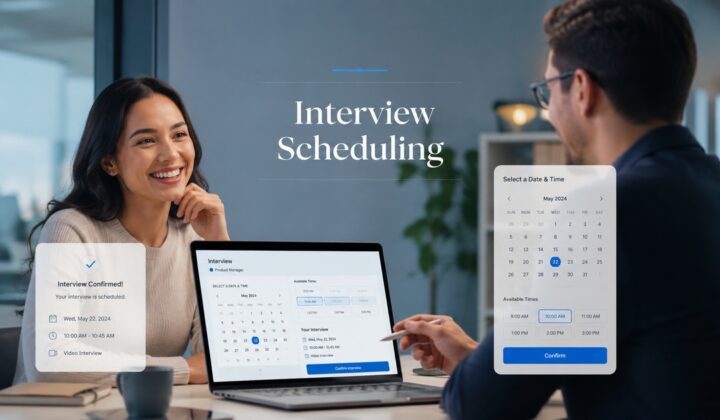
Interview Scheduling Automation That Candidates Actually Like
How to automate interview scheduling without making candidates feel processed: the setup, the human touches, and the friction points worth removing.
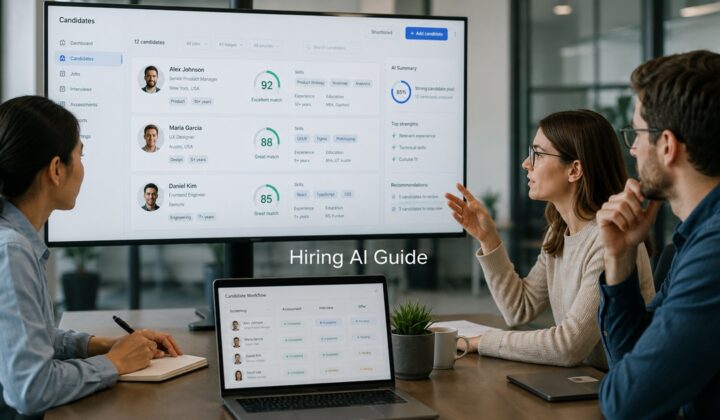
AI Recruiting Tools Buyer Guide for Hiring Teams
A buyer’s guide to AI recruiting tools for hiring teams: what they automate, how to evaluate them fairly, and the risks to…