Clay vs Apollo vs Common Room: Lead Enrichment Buyer Guide
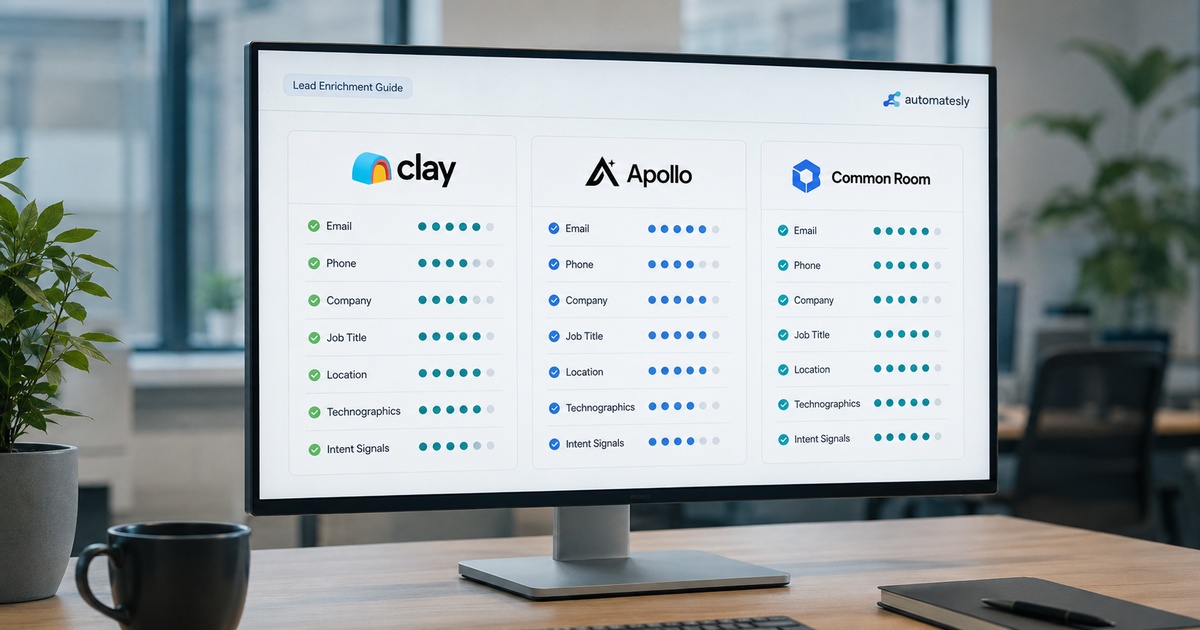
Lead enrichment, turning a name or email into a usable picture of who someone is and whether they are worth contacting, is the unglamorous engine behind effective outbound. Clay, Apollo, and Common Room all help here, but they approach the problem from genuinely different angles, and picking by reputation rather than fit leads to wasted spend and disappointing data. The right choice depends on how your team prospects and what “a good lead” means for you. Because data products change fast, this guide focuses on how each is built and how to choose, rather than data counts that will be stale tomorrow.
What lead enrichment actually does
Enrichment fills in the gaps around a lead so your team can prioritise and personalise. From a starting point, a domain, an email, a name, it appends details like role, company size, industry, and contact information, and increasingly signals about intent or activity. Good enrichment means reps spend time on the right prospects with the right context, rather than researching manually or blasting generic messages. The differences between tools come down to where their data and signals come from, how you work with that data, and whether they are built for static contact data or for tracking ongoing signals about accounts and people.
The three, in brief
These are broad, stable characterisations; verify current data coverage, sources, and pricing directly, as they change frequently.
Clay
Clay is known as a flexible enrichment and automation workspace that pulls from many data sources and lets you build custom enrichment and outbound workflows, often with AI steps. It tends to suit teams that want to combine multiple data providers and craft bespoke, highly personalised prospecting, and are comfortable building rather than using something out of the box.
Apollo
Apollo combines a large contact database with built-in prospecting and outreach features, positioning itself as an all-in-one for finding, enriching, and contacting leads. It often appeals to teams that want a single tool covering data and sequences without stitching several products together. Confirm current data quality for your specific markets, which varies by region and segment.
Common Room
Common Room focuses on capturing and unifying signals, surfacing intent and engagement across community, product, and other touchpoints rather than being a pure contact database. It suits teams running a signal-led or product-led motion who want to know which accounts and people are actually showing interest, not just who exists.
How to evaluate lead enrichment tools
Look past headline database sizes and weigh what determines real-world value for your team.
- Data relevance: coverage and accuracy for your specific markets and segments matter more than a big global number.
- Signals vs static data: do you need contact details, or live intent and engagement signals, or both?
- Workflow fit: do you want a flexible builder, an all-in-one, or a signal layer that feeds your existing tools?
- Integrations: does it push enriched data cleanly into your CRM and outreach stack?
- Compliance: how is the data sourced, and does it meet the privacy rules in your markets?
Match the tool to your motion
The right pick follows from how you actually sell. If you run highly customised outbound and want to blend data sources with automation, a flexible builder-style tool fits. If you want one place to find, enrich, and contact leads without assembling a stack, an all-in-one suits. If your motion is signal- or product-led and you care most about who is showing intent, a signal-focused tool is the better foundation. Many teams end up combining a data source with a signal layer, so do not assume you must choose just one. Whatever you pick, it should feed cleanly into the rest of your AI sales stack and your outreach sequences rather than living in isolation.
Data quality and compliance
Two things quietly decide whether enrichment helps or hurts: data quality and how you use it. Inflated database claims are common, so trial each tool on your real target segments and check the data against reality before committing, because bad data does not just waste time, it damages deliverability and your reputation when you contact the wrong people with wrong details. Equally important is compliance: enrichment touches personal data, so understand how each tool sources it and ensure your prospecting meets the privacy regulations in the regions you sell into. Treating enrichment as a licence to spray generic outreach is exactly the sales automation mistake that tanks reply rates. Good enrichment earns its keep by making outreach more relevant, not merely more voluminous.
Common enrichment mistakes
A few mistakes turn enrichment from an asset into a liability. The first is trusting database size over relevance, buying the tool with the biggest headline number and discovering its coverage of your actual segments is thin. The second is treating stale data as fresh: contact details decay constantly, so enrichment is a maintenance task, not a one-time import, and acting on months-old data wastes effort and harms deliverability.
The third, and most damaging, is using richer data as licence to contact more people rather than to contact the right people better. Enrichment should narrow and sharpen your outreach, not widen it. Teams that treat it as fuel for higher volume end up with the same generic spam, just better-targeted at the wrong goal. Used well, enrichment means fewer, more relevant, better-personalised touches, which is what actually lifts reply quality.
Frequently asked questions
What is the difference between Clay, Apollo, and Common Room?
Clay is a flexible enrichment and automation workspace that blends many data sources and custom workflows, suiting teams that want to build bespoke, highly personalised prospecting. Apollo is more of an all-in-one combining a contact database with built-in outreach, suiting teams that want a single tool. Common Room focuses on unifying intent and engagement signals across touchpoints, suiting signal-led or product-led motions. They solve related but distinct problems.
Which lead enrichment tool has the best data?
There is no universal best; data quality varies by region, segment, and the specific contacts you need, and headline database sizes are often inflated. The only reliable test is to trial each tool on your real target segments and check the appended data against reality before committing. A tool with strong coverage of your specific markets beats one with a larger but less relevant global database. Verify quality yourself rather than trusting marketing claims.
Do I need more than one lead enrichment tool?
Often, yes. Many teams combine a contact-data source with a signal layer, since static data and live intent signals answer different questions: who exists versus who is showing interest. There is no rule that you must choose only one, and the right combination depends on your motion. What matters is that whatever tools you use feed cleanly into your CRM and outreach stack rather than creating disconnected silos of data.

Written by gautam995576@gmail.com
AI automation editor focused on workflow design, tool selection, privacy checks, and operational clarity.
Related automation guides
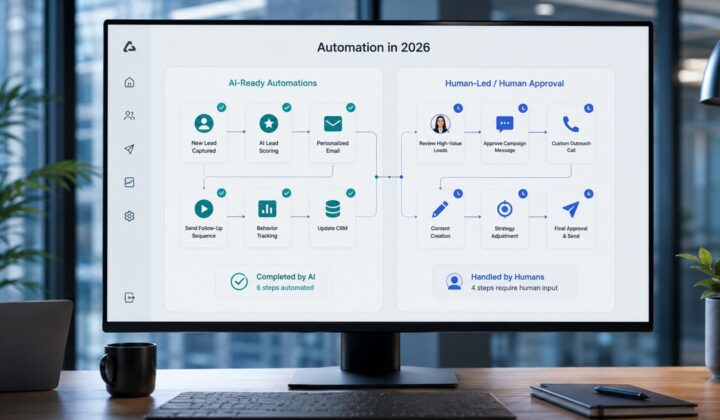
Marketing Automation in 2026: What Is Ready and What Still Needs Humans
Where marketing automation genuinely delivers in 2026 and where it still needs a human, so you automate the right work and keep…
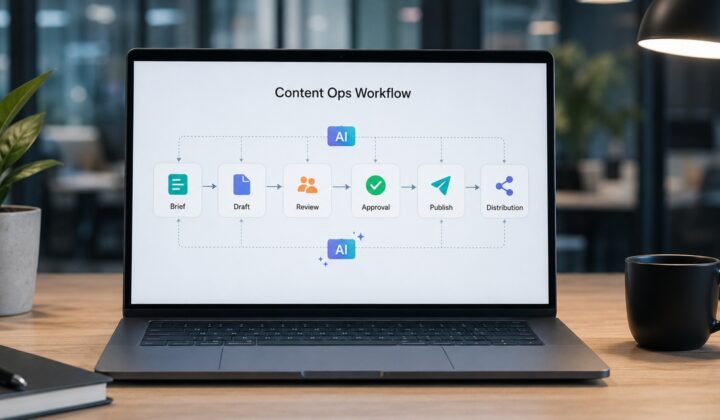
AI Content Operations Workflow for Small Marketing Teams
How a small marketing team can build an AI content workflow that keeps quality high: roles, review steps, and where AI helps…
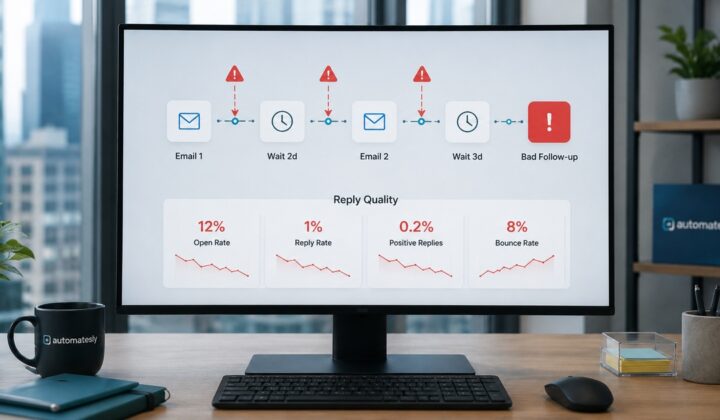
Sales Automation Mistakes That Lower Reply Quality
The sales automation habits that quietly kill reply rates, from over-personalised spam to broken sequences, and how to automate without sounding like…