AI Content Operations Workflow for Small Marketing Teams
AI can help a small marketing team produce far more content, and that is exactly the danger. Without a workflow, AI content operations slide into churning out high-volume, low-quality material that fills a calendar and moves nobody, while quietly eroding your brand. A good content workflow is what lets you use AI for genuine leverage, more output without less quality, by being clear about where AI helps, where humans must step in, and how work moves from idea to published. Here is how a small team can build that workflow without heavy process.
Why content ops needs a workflow, not just a tool
Buying an AI writing tool and pointing it at your blog is not a content operation; it is a content firehose. The tool can draft endlessly, but without a defined process, quality is inconsistent, the brand voice drifts, nobody owns review, and you end up publishing things that should never have gone out. A workflow imposes the structure that keeps AI-assisted content good: it defines the stages, sets where human judgement is required, and assigns ownership, so volume does not come at the cost of the standards that make content worth publishing. The tool provides capacity; the workflow provides control.
Map the stages
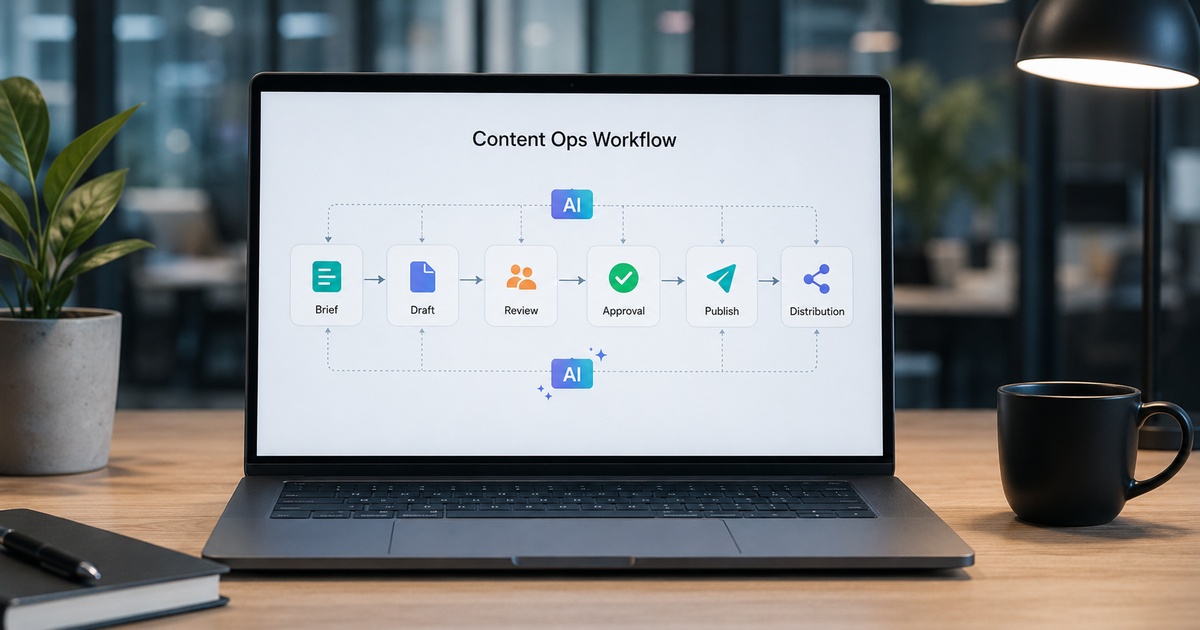
Start by mapping how a piece of content actually moves from idea to live, because you cannot insert AI sensibly into a process you have not defined.
- Strategy and ideas: deciding what to create and why, tied to real goals and audience needs.
- Brief: defining the angle, key points, audience, and intent before any drafting.
- Draft: producing the first version.
- Edit and fact-check: improving quality, voice, and accuracy.
- Review and approve: a human sign-off on quality and appropriateness.
- Publish and distribute: getting it live and in front of people.
Where AI fits at each stage
AI belongs at specific stages and should stay out of others. It helps with idea generation and research, producing strong first drafts from a good brief, creating variations and repurposing one piece into many formats, and drafting distribution copy. It should not own strategy, the final brief, fact-checking, or final approval, which are human judgement calls. The pattern that works for small teams is human-defined brief, AI-assisted draft, human edit and approval, because the brief and the review are where quality is set and protected, while the drafting in between is where AI saves the most time. Skipping the human brief or review is exactly where AI content operations go wrong.
Quality control and review
The review stage is where AI content workflows succeed or fail, so make it non-negotiable for anything published. A human must check accuracy, AI can state things confidently and wrongly, so fact-checking is essential, especially in areas where errors carry real consequences. A human must check voice and quality, ensuring it sounds like your brand and is worth reading, not just grammatically fine. And a human must judge appropriateness and context. This is the same discipline as keeping a human in marketing automation: automate the production, but never the final judgement. A fast, consistent review step is what lets you publish AI-assisted content confidently rather than nervously.
Roles and ownership
Even on a tiny team, clear ownership keeps the workflow honest. Someone owns strategy and the brief, the direction-setting that AI should not make. Someone owns editing and review, the quality gate. These can be the same person wearing different hats, but the roles must be explicit, because the failure mode is content flowing straight from AI draft to published with nobody truly accountable for quality. Define who signs off before anything goes live, keep the process light enough to actually follow, and treat the workflow as the thing that lets AI multiply your output safely. Used this way, a small team can produce more and better content, with AI handling the volume and humans guarding the standards.
Common content operations mistakes
The mistakes that derail AI content operations are predictable, and most come from skipping a stage to move faster. The first is publishing straight from an AI draft with no real human edit, which produces technically fine but soulless content that quietly lowers your brand. The second is no brief: asking AI to “write a post about X” with no angle, audience, or intent, then being disappointed by generic output, when the thin brief was the problem.
The third is volume for its own sake, measuring success by how much you publish rather than what it achieves, which is the content equivalent of the lean-stack discipline in our sales stack guide: more is not better if it is not working. The fourth is neglecting fact-checking, trusting confident AI output on things it can get wrong. And the fifth is letting brand voice drift as different drafts pull in different directions with no one guarding consistency. Each is avoided by the same workflow discipline, a real brief, a real review, clear ownership, and judging content by results rather than quantity.
Frequently asked questions
How should a small team use AI for content?
Use a workflow with clear stages, and apply AI where it helps while keeping humans where judgement matters. The reliable pattern is human-defined brief, AI-assisted draft, human edit and approval. Let AI handle idea generation, research, first drafts, and repurposing; keep strategy, the final brief, fact-checking, and final approval human. The brief and review are where quality is set and protected, so never skip them, no matter how good the draft looks.
How do I keep AI content quality high?
Make human review non-negotiable for anything published. A person must fact-check, since AI can state things confidently and wrongly; check voice and quality so it sounds like your brand and is worth reading; and judge appropriateness and context. Set quality through a clear brief up front and protect it through review at the end. Automate the production between those points, but never automate the final judgement that decides whether something should go out.
Who should own an AI content workflow on a small team?
Assign two explicit roles even if one person fills both: an owner of strategy and the brief, who sets direction AI should not decide, and an owner of editing and review, who guards quality before publication. The failure mode is content flowing straight from AI draft to live with nobody accountable. Define who signs off before anything publishes, and keep the process light enough that the team actually follows it in practice rather than quietly working around it whenever deadlines start to press and corners begin to look tempting to cut under real time pressure.

Written by gautam995576@gmail.com
AI automation editor focused on workflow design, tool selection, privacy checks, and operational clarity.
Related automation guides
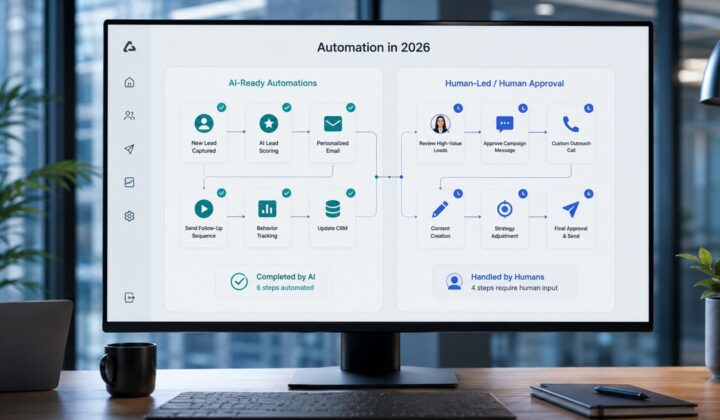
Marketing Automation in 2026: What Is Ready and What Still Needs Humans
Where marketing automation genuinely delivers in 2026 and where it still needs a human, so you automate the right work and keep…
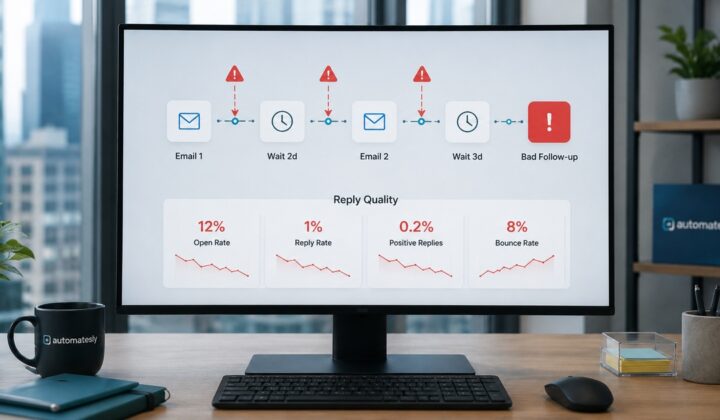
Sales Automation Mistakes That Lower Reply Quality
The sales automation habits that quietly kill reply rates, from over-personalised spam to broken sequences, and how to automate without sounding like…

The Practical AI Sales Stack for Small B2B Teams
A realistic AI sales stack for small B2B teams: which tools earn their place, how the pieces fit together, and where to…