Smartlead vs Instantly vs Apollo Sequences: Cold Email Tool Guide
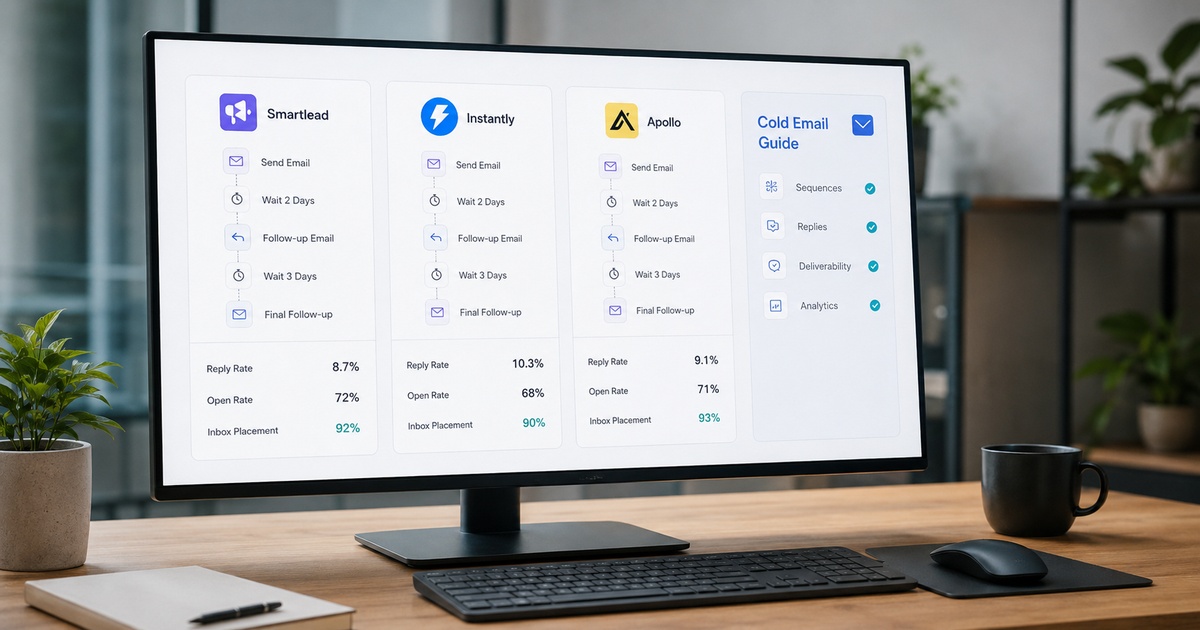
Pick the wrong cold email tool and it is not just a workflow annoyance, it can quietly torch your domain reputation and land your messages in spam, which is far more expensive than any subscription. Smartlead, Instantly, and Apollo are common choices, and while they overlap, they emphasise different things. The deciding factor is rarely the feature list; it is deliverability and how the tool helps you protect it, plus how it fits the rest of your outbound. Because these tools evolve quickly, this guide focuses on what matters and how to choose, not specs that age in months.
What cold email tools actually do
At their core, these tools send personalised email sequences at scale and manage the replies, but the serious work is everything around deliverability: rotating across multiple sending accounts, warming up inboxes, managing sending limits, and keeping messages out of spam. A good cold email tool is really a deliverability-management tool with sequencing attached, because being able to send ten thousand emails is worthless if they never reach the inbox. That framing is the key to comparing them: judge them first on how well they help you actually land in the inbox, then on workflow and integration.
The three, in brief
Broad, stable characterisations; confirm current features, limits, and pricing directly, as they change often.
Smartlead
Smartlead is known for a focus on deliverability at scale, with features around multiple inbox rotation and warm-up aimed at high-volume senders who need to protect sending reputation. It tends to appeal to teams running serious outbound volume who treat deliverability as the priority.
Instantly
Instantly also centres on deliverability and scale with inbox rotation and warm-up, and is often noted for an approachable experience. It appeals to teams that want strong sending infrastructure with a straightforward workflow for running campaigns.
Apollo sequences
Apollo bundles sequencing with its contact database and broader sales platform, so its appeal is being part of an all-in-one rather than a dedicated deliverability specialist. It suits teams already using Apollo for data who want sequencing in the same place, though pure high-volume senders often prefer a specialist sending tool. Verify current sending and deliverability capabilities for your volume.
Deliverability is the real battleground
Whichever tool you consider, deliverability should dominate the decision, because it is where cold email succeeds or fails. Look at how each handles inbox rotation across multiple sending accounts, automated warm-up, and sending-limit management, the mechanics that keep you out of spam. But understand the hard truth: no tool can save bad practice. Sending poorly targeted, generic mass email will damage your reputation regardless of how sophisticated the rotation is. The tool gives you the infrastructure to send responsibly; protecting deliverability still depends on good targeting and restraint, which is why enrichment quality from your lead enrichment matters as much as the sender.
How to choose
Match the tool to your volume and setup. If you run high-volume outbound and treat deliverability as paramount, a dedicated sending specialist with strong rotation and warm-up is the safer bet. If you want capable sending with an approachable workflow, the more user-friendly specialists fit. If you already live in an all-in-one platform for data and want sequencing in the same place, and your volume is moderate, staying in that ecosystem can be simplest. Trial on a real campaign and watch deliverability, not just whether the sequence sends. And make sure the tool connects cleanly to the rest of your sales stack so replies and data do not get stranded.
Pitfalls to avoid
The biggest mistakes with cold email tools are about how you use them, not which you pick. Scaling volume before your targeting and messaging are good simply scales the damage, more spam complaints, faster reputation decay. Neglecting warm-up and burning fresh domains is a common self-inflicted wound. And leaning on the tool’s scale to send generic, barely-personalised email is the surest route to terrible reply rates and a blacklisted domain, exactly the automation mistakes that lower reply quality. Treat the tool as infrastructure that rewards good practice and punishes bad, choose for deliverability, and never let scale outrun quality.
Warm-up and the first thirty days
How you start with a cold email tool largely determines whether it works, because sending reputation is earned slowly and lost quickly. New sending domains and inboxes need warming up, gradually increasing volume over weeks so mailbox providers learn to trust you, and skipping this to blast at full volume on day one is the fastest way to land permanently in spam. Most serious tools automate warm-up, but you still have to respect it rather than override it in a rush to scale.
In the first month, keep volumes modest, watch your deliverability and reply signals closely, and fix targeting or messaging problems while they are small. Use separate sending domains from your main company domain so a mistake never damages your primary reputation. Treat early results as diagnostics, not disappointments: low replies usually mean a targeting or messaging issue to fix, not a reason to send more. Teams that are patient through warm-up and the first thirty days build durable deliverability; teams that rush it spend the following months recovering a burned reputation.
Frequently asked questions
Which is best for cold email: Smartlead, Instantly, or Apollo?
It depends on volume and setup. For high-volume outbound where deliverability is paramount, a dedicated sending specialist with strong inbox rotation and warm-up tends to be the safer choice. For capable sending with an approachable workflow, the more user-friendly specialists fit. If you already use an all-in-one platform for data and have moderate volume, keeping sequencing there can be simplest. Trial on a real campaign and judge by deliverability, not just whether it sends.
What matters most in a cold email tool?
Deliverability. A cold email tool is really a deliverability-management tool with sequencing attached, because sending volume is worthless if messages land in spam. Prioritise how well it handles inbox rotation across multiple accounts, automated warm-up, and sending-limit management. Features and scale matter far less than reaching the inbox. That said, no tool overcomes bad targeting or generic messaging, which damage reputation regardless of the infrastructure.
Can a cold email tool protect my domain reputation?
It can help significantly through warm-up, inbox rotation, and sending limits, but it cannot save bad practice. Poorly targeted, generic mass email damages your reputation no matter how sophisticated the tool. Scaling volume before your targeting and messaging are good simply scales the harm. The tool provides infrastructure to send responsibly; protecting deliverability still depends on good targeting, genuine personalisation, and not letting volume outrun quality.

Written by gautam995576@gmail.com
AI automation editor focused on workflow design, tool selection, privacy checks, and operational clarity.
Related automation guides
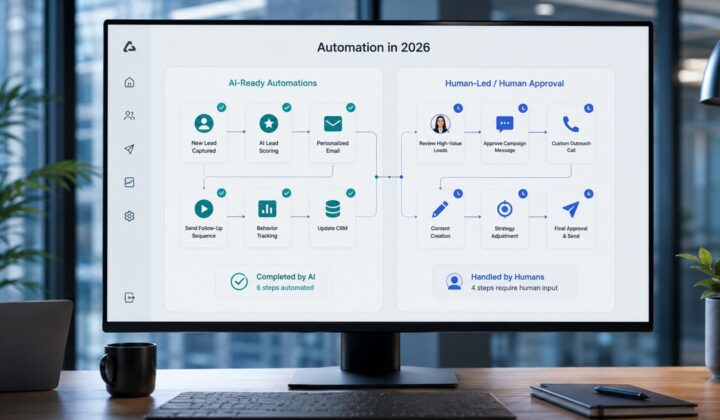
Marketing Automation in 2026: What Is Ready and What Still Needs Humans
Where marketing automation genuinely delivers in 2026 and where it still needs a human, so you automate the right work and keep…

AI Content Operations Workflow for Small Marketing Teams
How a small marketing team can build an AI content workflow that keeps quality high: roles, review steps, and where AI helps…
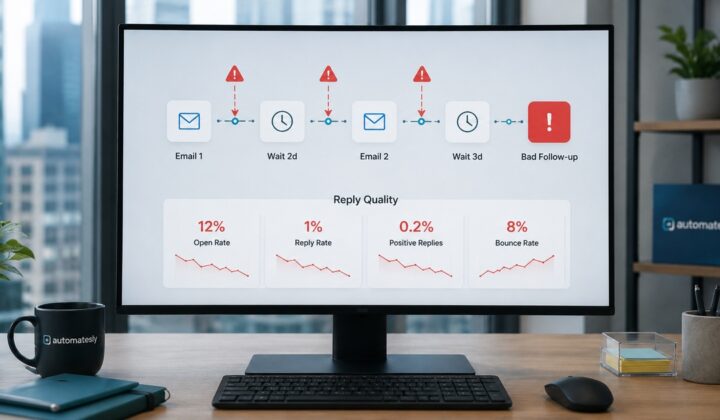
Sales Automation Mistakes That Lower Reply Quality
The sales automation habits that quietly kill reply rates, from over-personalised spam to broken sequences, and how to automate without sounding like…