Contract Review AI Tools: Practical Buyer Guide
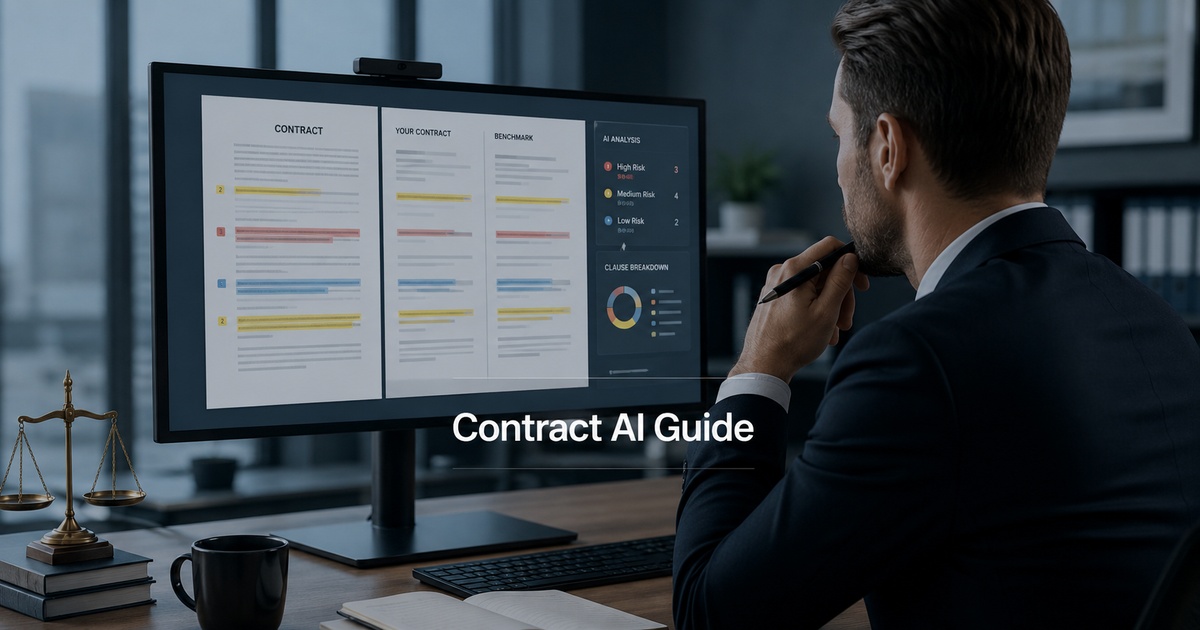
Contract review AI promises to read agreements faster than any lawyer, flag risky clauses, and save hours of tedious review. Some of that is real and genuinely useful; some of it is overstated in ways that can get a business into trouble if taken at face value. For anyone evaluating these tools, the most important thing is a clear-eyed understanding of what they can and cannot do, because contracts carry legal and financial consequences, and treating AI output as legal advice is a serious mistake. This guide covers what contract review AI does well, how to evaluate it, and where a human lawyer remains essential.
What contract review AI can and cannot do
Used realistically, contract review AI is a powerful assistant. It can read long contracts quickly, extract key terms and dates, flag clauses that deviate from your standards or look unusual, compare a document against a playbook or prior versions, and surface things a human might miss in a long document under time pressure. That genuinely speeds up review and improves consistency. What it cannot do is exercise legal judgement, understand your specific commercial context and risk appetite, or be relied upon as correct without verification. It can be confidently wrong, miss nuance, or misjudge what matters in your situation, so its output is a starting point for review, not a substitute for it.
Types of contract review tools
The category spans a range, and matching the type to your need avoids overbuying.
- General-purpose AI assistants: broad tools that can summarise and answer questions about a contract, flexible but not specialised or built for legal rigour.
- Dedicated contract review platforms: purpose-built legal tools with playbooks, clause libraries, and workflow, suited to teams reviewing contracts regularly.
- Contract lifecycle management with AI: broader systems that manage contracts end to end with AI review features built in.
Occasional, low-stakes review may be served by a general assistant with careful human checking; regular, higher-stakes review usually justifies a dedicated legal tool. Verify current capabilities directly, as this space moves quickly.
How to evaluate contract review AI
Weigh the factors that determine real-world usefulness and safety.
- Accuracy on your contracts: test it on your real agreement types, not vendor samples, and check what it flags and misses.
- Transparency: does it show why it flagged something and let you verify against the source, rather than asking for blind trust?
- Playbook and customisation: can it apply your standards and positions rather than generic rules?
- Security and confidentiality: contracts are sensitive, so data handling is critical.
- Workflow fit: how it slots into how your team actually reviews and negotiates.
Where a human lawyer is essential
This is the part no tool should let you forget: contract review AI assists legal review; it does not replace legal judgement, and treating its output as legal advice is a real risk. A qualified lawyer is essential for the legal judgement calls, the interpretation of how a clause actually plays out, the commercial and risk decisions specific to your business, and anything high-stakes or unusual. The right model is AI as a fast first pass that makes the human review more efficient and thorough, with a lawyer making the actual decisions, especially on important agreements. Because contracts are highly confidential, also run any tool through a proper security review before letting it near your agreements, and keep data handling tight as you would for any internal tool touching sensitive data.
Managing risk and accuracy
Adopt contract review AI with its limits built into how you use it. Never act on its output without verification, treat every flag and summary as a prompt to check the source clause yourself. Use it to make review faster and more consistent, not to skip review, and be especially careful on important or unusual contracts where its judgement is least reliable and the stakes are highest. Keep a qualified human, and for significant matters a lawyer, firmly in the decision seat. Used this way, contract review AI is a genuine efficiency gain that catches things and speeds up routine work; used as a replacement for legal judgement, it is a liability waiting to surface in a dispute. Nothing here is legal advice; consult a qualified professional for your specific contracts.
Introducing contract review AI safely
Bring contract review AI in as an assistant to your existing review, not a replacement for it, and the risks stay manageable. Start by running it alongside your normal human review on contracts you are reviewing anyway, comparing what it flags against what your reviewer or lawyer finds, so you learn where it is reliable and where it misses before you lean on it. Use that period to calibrate trust: it may be dependable at extracting dates and standard terms while weaker at nuanced or unusual clauses.
Once you know its strengths, let it speed up the routine parts, first-pass review, term extraction, consistency checks against your playbook, while keeping human judgement firmly on the decisions and a lawyer involved on anything important. Never let efficiency pressure push you into acting on its output unverified, especially on high-stakes agreements. Introduced this way, as a fast, fallible first reader whose work a human always checks, contract review AI delivers real time savings without quietly transferring legal judgement to a tool that cannot exercise it.
Frequently asked questions
What can contract review AI actually do?
It can read long contracts quickly, extract key terms and dates, flag clauses that deviate from your standards or look unusual, compare documents against a playbook or prior versions, and surface things a human might miss under time pressure. That speeds up review and improves consistency. What it cannot do is exercise legal judgement, understand your specific commercial context, or be trusted without verification, so its output is a starting point for review, not a substitute for it.
Can contract review AI replace a lawyer?
No. Contract review AI assists legal review but does not replace legal judgement, and treating its output as legal advice is a real risk. A qualified lawyer remains essential for interpretation, commercial and risk decisions specific to your business, and anything high-stakes or unusual. The right model is AI as a fast first pass that makes human review more efficient, with a lawyer making the actual decisions on important agreements. This is general information, not legal advice.
How do I choose a contract review AI tool?
Match the type to your need: a general AI assistant with careful human checking for occasional low-stakes review, or a dedicated legal platform for regular, higher-stakes work. Then test accuracy on your real contract types, check whether it shows its reasoning and lets you verify against the source, confirm it can apply your playbook, and scrutinise security and confidentiality since contracts are sensitive. Verify current capabilities directly, and always keep a human, ideally a lawyer, making the decisions.

Written by gautam995576@gmail.com
AI automation editor focused on workflow design, tool selection, privacy checks, and operational clarity.
Related automation guides
Accounts Payable Automation Checklist for Growing Teams
A practical accounts payable automation checklist for growing teams: approvals, controls, exceptions, and the steps that prevent costly payment mistakes.
Invoice Automation Tools Guide for Finance Teams
A finance team’s guide to invoice automation: what these tools actually do, how to evaluate accuracy and fit, and how to roll…
OCR vs Document AI: Which One Fits Your Finance Workflow
OCR or document AI for your finance workflow? How they differ, where each works best, and how to choose based on your…