Intercom Fin vs Zendesk AI vs Ada: Support AI Decision Guide

Support AI has gone from a nice-to-have to a default consideration, and three names come up constantly: Intercom Fin, Zendesk AI, and Ada. They all promise to resolve customer questions automatically, deflect tickets, and free your team for the hard cases, but they sit in different ecosystems and suit different setups. Choosing well is less about which has the cleverest model and more about which fits your existing tools, your content, and how your support actually runs. Because these products evolve quickly, this guide focuses on how to decide rather than a feature snapshot that will date fast.
What support AI actually does now
Modern support AI does more than the old keyword chatbots. It can understand a customer’s question in natural language, draw on your help content and past conversations to answer, resolve common issues end to end, and hand off cleanly to a human when it cannot help. The better implementations feel less like a wall to get past and more like a fast first responder. But the quality of that experience depends heavily on your underlying content and setup, not just the tool, which is the single most important thing to understand before comparing vendors.
All three tools in this guide do versions of this. The meaningful differences are about ecosystem fit, how they use your content, the setup effort involved, and how naturally they hand off to your human team.
The three, in brief
These are broad, stable characterisations; confirm current capabilities, models, and pricing directly, as they change often.
Intercom Fin
Fin is Intercom’s AI agent, built tightly into the Intercom messenger and platform. It tends to be the natural choice for teams already using Intercom for support and messaging, where the integration and conversational experience are strongest. If Intercom is your hub, Fin is the path of least resistance.
Zendesk AI
Zendesk’s AI capabilities are woven into its widely used support suite, covering bots, agent assistance, and automation across tickets and help center. It suits teams already standardised on Zendesk who want AI layered into the ticketing workflows they already run, rather than a separate tool.
Ada
Ada is a dedicated, platform-agnostic automation specialist, designed to resolve customer conversations across channels and integrate with various backends. It often appeals to teams that want a focused automation layer not tied to one help-desk ecosystem, particularly at higher volumes. Verify its current integrations against your stack.
How to evaluate support AI
Rather than comparing feature checklists, weigh the dimensions that actually determine whether support AI works for you.
- Ecosystem fit: does it integrate cleanly with your existing help desk, channels, and backend systems?
- Content readiness: how well does it use your help content, and how much content work will it need to perform?
- Setup effort: how much configuration, training, and ongoing tuning does it require?
- Handoff quality: how smoothly does it pass complex cases, with context, to your human agents?
- Honest measurement: can you see real resolution quality, not just a flattering deflection number?
Match the tool to your support setup
The right choice usually follows from where your support already lives. If you run on Intercom, Fin is the natural fit; if you run on Zendesk, its AI is the path of least friction; if you want a focused, channel-agnostic automation layer independent of one help desk, Ada is worth a close look. The deeper point is that the best support AI for you is rarely the one with the flashiest demo, but the one that fits your stack and content with the least friction. Before committing, trial the contenders on your real questions and content, and decide how you will measure deflection honestly so the trial tells you something true.
Why the tool is not what determines success
Here is the uncomfortable truth every vendor underplays: the biggest factor in support AI success is not the tool, it is your help content. Support AI answers from what you give it, so thin, outdated, or disorganised help content produces a confidently wrong or unhelpful bot regardless of which product you buy. Teams that get great results almost always did the unglamorous work of getting their content ready first, which is why a help center readiness check matters more than the vendor choice. Pair good content with sensible ticket triage, and almost any of these tools can perform; skip it, and none of them will.
A sensible rollout plan
Whichever tool you choose, roll it out in stages rather than flipping it on for every customer at once. Start narrow: point the AI at a well-defined slice of your questions, the high-volume, well-documented ones, and let it handle those while everything else goes straight to humans. Watch real conversations closely in this phase, correcting content and configuration before widening the scope.
As the AI proves itself on the easy cases, expand its remit deliberately, adding topics only once the content behind them is ready and the results hold up. Keep the human handoff prominent throughout, so a customer is never trapped, and resist the temptation to chase a high automation rate by hiding the escape route. A staged rollout earns trust with both customers and your team, and it surfaces problems while they are small and cheap to fix rather than after a frustrating launch has already damaged confidence in the tool.
Frequently asked questions
How do I choose between Intercom Fin, Zendesk AI, and Ada?
Start from where your support already lives: Fin is the natural fit if you run on Intercom, Zendesk AI if you run on Zendesk, and Ada if you want a focused, channel-agnostic automation layer independent of one help desk. Then weigh content readiness, setup effort, and handoff quality, and trial each on your real questions. The best fit is usually the one that integrates with your stack and content with the least friction, not the flashiest demo.
Which support AI tool resolves the most tickets?
There is no universal winner; resolution depends far more on the quality of your help content and setup than on the tool itself. Support AI answers from what you give it, so thin or outdated content produces poor results regardless of vendor. Teams that get high resolution almost always prepared their content and tuning first. Trial the contenders on your real questions and measure honest resolution quality rather than trusting headline deflection figures.
Do I need to switch help desks to use support AI?
Not necessarily. If you use Intercom or Zendesk, their built-in AI lets you add automation without leaving your platform. If you prefer to keep your help desk and add a focused automation layer, a platform-agnostic tool like Ada is designed to integrate across backends and channels. Confirm the specific integrations against your stack before committing, since smooth integration with your existing tools matters more than any single feature.

Written by gautam995576@gmail.com
AI automation editor focused on workflow design, tool selection, privacy checks, and operational clarity.
Related automation guides
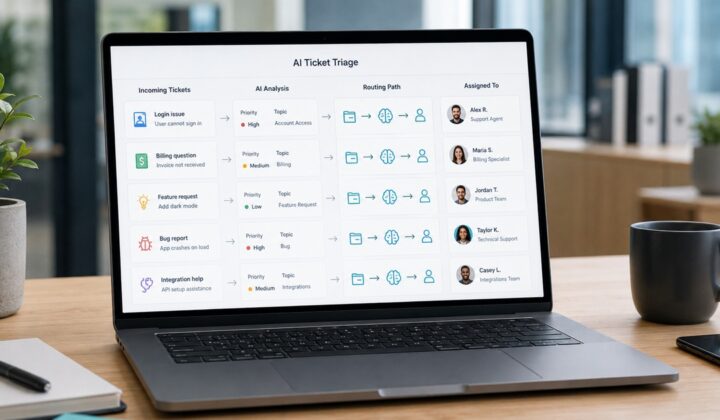
AI Ticket Triage: Practical Setup Guide for Support Teams
A practical guide to setting up AI ticket triage: routing, tagging, and prioritising tickets so the right ones reach the right people…
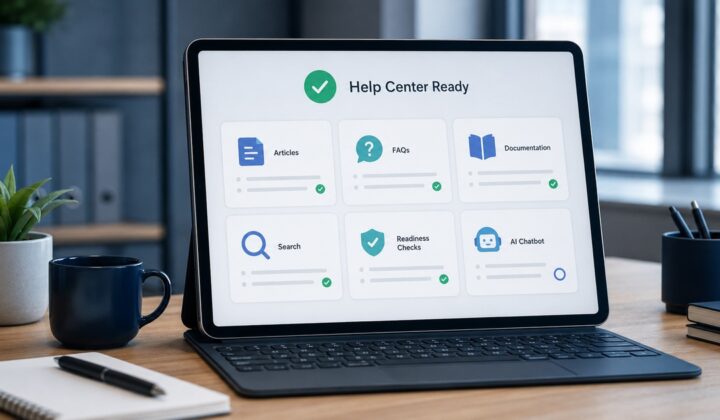
Help Center Readiness Checklist Before Adding an AI Chatbot
Before you add an AI chatbot, get your help center ready. A checklist to audit content, fill gaps, and set the support…

How to Measure Support AI Deflection Honestly
Deflection rates are easy to game. How to measure support AI honestly, the metrics that mislead, and what actually tells you whether…