AI Agents vs Workflow Automation: What to Use First
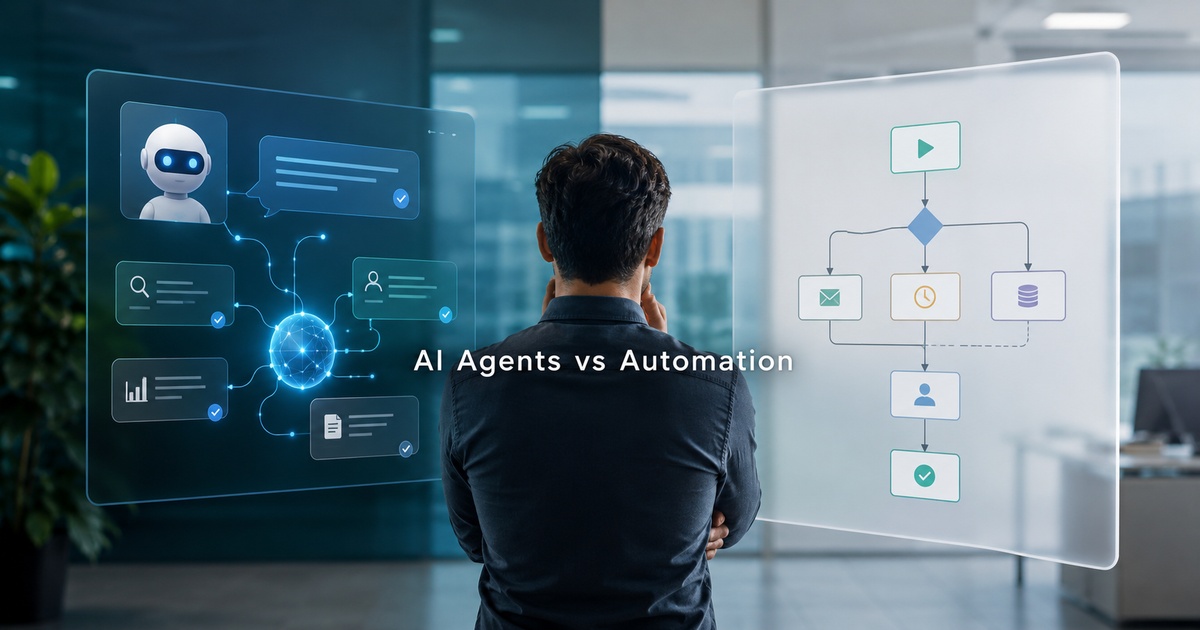
“AI agent” is the phrase of the moment, and plenty of teams now assume they need one when what they actually need is a plain, reliable workflow automation. The two are genuinely different tools, suited to different problems, and reaching for the wrong one wastes money and trust. Workflow automation follows rules you define; an AI agent makes decisions you delegate. Knowing which fits the job, and which to reach for first, saves you from either over-engineering a simple task or asking a deterministic tool to handle ambiguity it cannot. Here is how to tell them apart and choose well.
What workflow automation does well
Workflow automation is deterministic: you define the trigger, the steps, and the logic, and it does exactly that, every time, the same way. When a form is submitted, copy the data here, notify that person, update this record. Its great strengths are reliability and predictability, you know precisely what it will do, and it does it consistently and cheaply at scale. For the vast majority of repetitive, rule-based business tasks, this is exactly what you want, and it is the backbone of most teams’ automation, as our look at workflow automation use cases shows.
The limit of workflow automation is judgement. It cannot handle situations you did not anticipate, interpret messy or ambiguous input, or decide what to do when the rules run out. Ask it to deal with genuine variability and it either breaks or needs an ever-growing thicket of branches you have to maintain.
What AI agents do differently
An AI agent is built around a model that can interpret, reason, and decide within the boundaries you set, rather than following a fixed script. You give it a goal and some tools, and it works out steps to achieve it, handling variation and ambiguity that would break a rigid workflow. That makes agents powerful for tasks involving unstructured input, judgement, or many possible paths, summarising and acting on a messy inbox, researching and drafting, triaging things that do not fit neat categories.
The trade-off is the mirror image of automation’s: agents are flexible but less predictable. The same input can produce different outputs, they can make mistakes or “hallucinate,” and they cost more to run. That unpredictability is fine for low-stakes or human-reviewed work and dangerous for high-stakes actions left unchecked, which is why human-in-the-loop approval steps matter so much with agents.
The key difference: rules versus reasoning
Strip away the hype and the distinction is simple. Workflow automation executes rules you wrote; AI agents apply reasoning you delegated. Automation is a reliable machine doing exactly as told; an agent is more like a capable but fallible junior assistant you have handed a goal. That framing answers most “which one” questions: if you can write down the exact rules and they rarely change, you want automation; if the task genuinely requires interpretation or judgement that you cannot fully specify, an agent may fit. Most real work is more rule-based than the hype suggests.
Which to use first
For most teams, the honest answer is workflow automation first. It is cheaper, more reliable, easier to reason about, and it solves the bulk of everyday repetitive work without the unpredictability of a model. Reach for an AI agent only when a task genuinely defeats rules, when the input is unstructured or the decisions too varied to script, and even then, start with a human reviewing its output. Teams that lead with agents for everything tend to pay more, debug more, and trust the results less. Lead with automation, add agents where reasoning is genuinely required.
Combining the two
In practice the most effective setups blend them rather than choosing one. A reliable workflow handles the deterministic plumbing, triggering, moving data, logging, while an agent is called in for the one step that needs judgement, then control returns to the workflow. For example, automation catches every inbound email and logs it; an agent classifies the ambiguous ones; automation routes them based on that classification. This hybrid gives you the reliability of automation with the flexibility of an agent exactly where it is needed, and it keeps the unpredictable part small, contained, and easy to review.
Where agents go wrong
The common failure is using an agent where a rule would do, paying for unpredictability you did not need, or trusting an agent with consequential actions and no review. Agents also fail quietly when their inputs or tools change, much as automations do, but with more variable symptoms. The fix is the same discipline either way: scope the task tightly, keep a human in the loop for anything consequential, and monitor outputs. Used with that discipline, agents are a genuine step up for judgement-heavy work; used as a buzzword applied to everything, they are an expensive way to make simple tasks less reliable.
A quick test before you build
When you are unsure which to reach for, ask one question: can I write down the exact rules for this task, and will those rules hold? If yes, build a workflow automation, picking a platform with help from our Zapier, Make, and n8n comparison; it will be cheaper, more reliable, and easier to maintain. If the rules keep sprouting exceptions, or the task genuinely depends on interpreting something messy, an agent may be the better fit, but start it behind human review. This single question resolves most cases without any debate about which approach is more advanced, because the right tool is simply the one that matches the nature of the work in front of you.
Frequently asked questions
What is the difference between an AI agent and workflow automation?
Workflow automation follows fixed rules you define and does exactly that every time, making it reliable and predictable for repetitive, rule-based tasks. An AI agent uses a model to interpret, reason, and decide within boundaries you set, making it flexible for ambiguous, judgement-heavy tasks but less predictable and more prone to mistakes. In short, automation executes rules; an agent applies delegated reasoning.
Should I use an AI agent or workflow automation first?
For most teams, workflow automation first. It is cheaper, more reliable, and solves the bulk of everyday repetitive work without the unpredictability of a model. Reach for an AI agent only when a task genuinely defeats rules, when input is unstructured or decisions are too varied to script, and start with a human reviewing its output. Leading with agents for everything usually costs more and is harder to trust.
Can AI agents and workflow automation work together?
Yes, and the best setups often combine them. A reliable workflow handles the deterministic plumbing, triggering, moving data, logging, while an agent is called in for the specific step that needs judgement, then control returns to the workflow. This hybrid gives the reliability of automation with the flexibility of an agent only where needed, keeping the unpredictable part small, contained, and easy to review.

Written by gautam995576@gmail.com
AI automation editor focused on workflow design, tool selection, privacy checks, and operational clarity.
Related automation guides

Security Review Checklist Before Buying an AI Tool
A practical security review checklist for any AI tool before you buy: data handling, access, retention, compliance, and the questions vendors should…
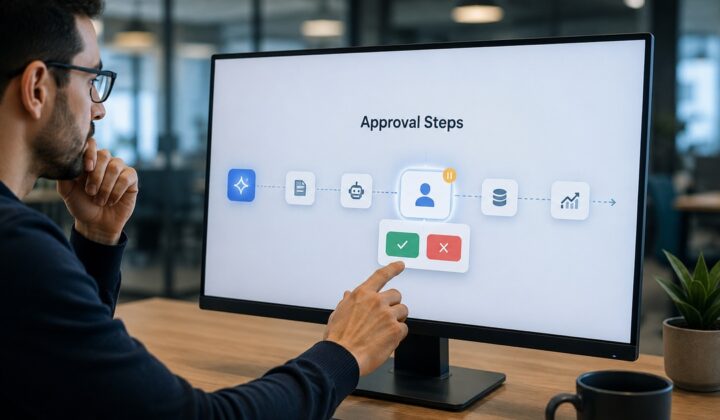
Human-in-the-Loop Automation: Where AI Agents Need Approval Steps
Where AI agents should pause for human approval and where they can run alone. How to add review steps that catch errors…
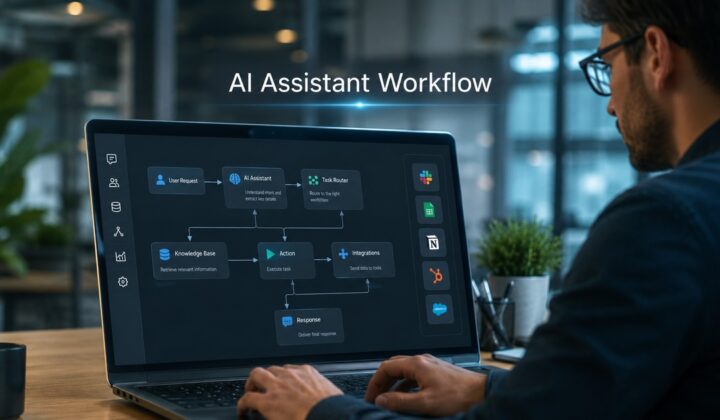
AI Assistant Workflow Design for Busy Operators
How busy operators can design AI assistant workflows that actually save time, choosing the right tasks, setting guardrails, and keeping a human…